




Quartz Countertop Care and Cleaning: A Practical Guide
Everyday care for a quartz countertop is usually simple: wipe the surface with a soft cloth, warm water, and a mild detergent, then rinse and dry. That habit prevents most residue and water marks. Quartz is durable, but it is not scratch-proof, stain-proof, or heat-proof, and care advice is product-specific. Always follow the manufacturer’s guide for the installed colour and finish.
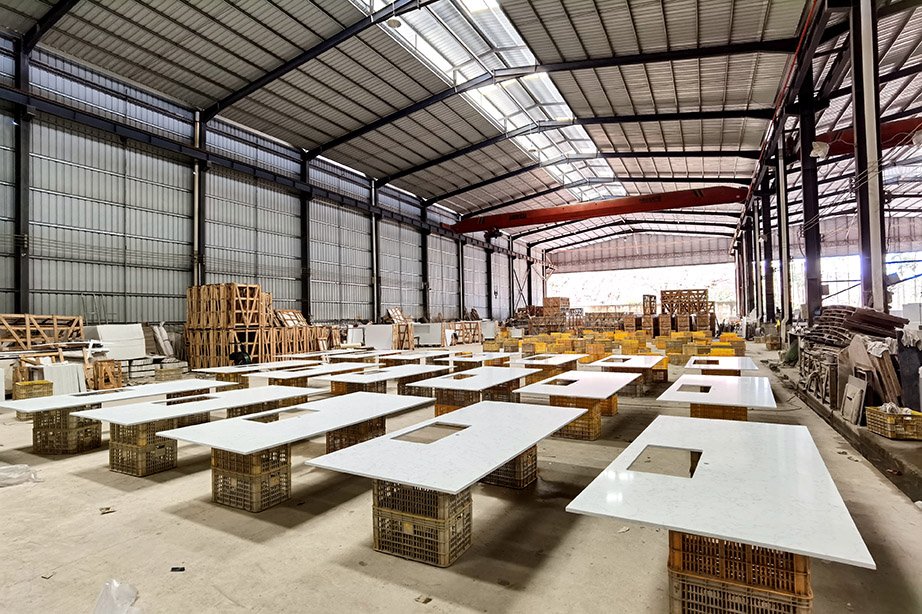
Finished cut-to-size quartz kitchen countertops in the Aspire Stone workshop.
Aspire Stone has not published a detailed care sheet on the live pages fetched for this article. The guidance below summarises what major quartz manufacturers tell end users, and where those instructions differ. If you have a supplier document for the exact slab, use that first.
What is the best way to clean quartz day to day?
For routine cleaning, several major manufacturers give the same basic method. Cambria tells users to clean with warm water, a soft cotton cloth, and mild soap if desired. Caesarstone’s UK care guidance recommends a soft cloth or a non-abrasive scourer in warm water mixed with a mild detergent, then a thorough rinse and a dry finish. Wipe up wet spills as you go. Liquid left to dry can leave a film, sometimes described as patina, which is more noticeable on dark colours.
Use a soft, non-abrasive cloth. Avoid scouring powders, steel wool, and abrasive pads unless the product’s own care guide names a specific non-scratch pad for a defined stain. If you are trying a new cleaner, test it on an inconspicuous area first.
A weekly wipe with the same mild method is usually enough. There is no benefit in coating a typical quartz worktop with wax, polish, or a stone sealer unless the manufacturer of that slab tells you to do so.
How should spills, oils, and food stains be handled?
Most food and drink marks come up if they are wiped promptly with mild detergent and water. For dried spills, several manufacturers recommend re-wetting the residue, then gently lifting it with a plastic scraper or a non-scratch pad, and rinsing.
Oils, grease, coffee, tea, wine, and strongly coloured foods should not be left to sit. They are not always absorbed into a low-porosity surface, but they can leave a film or, after long contact, a mark that is harder to remove. Hard-water spots are a separate issue: mineral residue on the surface, not a stain inside the slab. Drying the top after cleaning reduces them.
If a mark remains, use only a cleaner named in the product’s care guide. Caesarstone’s UK pages, for example, describe approved non-abrasive cleaners for stubborn residue and give specific advice for some rust or metal marks. Those product names and methods belong to Caesarstone’s own instructions. They should not be copied onto another brand, and they are not Aspire Stone recommendations.
If you cannot identify the surface, or if a stain does not respond to the approved method, contact the fabricator or supplier before trying a stronger chemical.
Which cleaners and tools can damage quartz?
Care lists are not identical from brand to brand, which is why a single household rule is risky.
Substances widely treated as harmful, or as needing immediate rinsing, include oven and grill cleaners, paint removers and strippers, products containing methylene chloride or trichloroethane, highly alkaline cleaners, and abrasive powders. Caesarstone UK tells users to avoid strong chemicals and highly abrasive agents such as oven or grill cleaners and dishwasher polishing agents with pH levels higher than 11, and to rinse at once if accidental contact occurs. Cambria tells users not to expose its product to abrasive, strong alkaline, acid, oxidising, or similar cleaners, and it specifically lists examples such as bleach, oven cleaners, Comet, Soft Scrub, SOS pads, products with pumice, paint removers, and tarnish or silver cleaners. Those “do not use” lists are brand-specific.
Vinegar is a good example of the difference. Some Caesarstone US care guidance allows a 50/50 vinegar and water solution if the surface is then rinsed and dried. Cambria tells users not to expose its product to acids, including many cleaners at high, neutral, or low pH. The safe answer is to follow the document for the installed product. If you do not have that document, ask the supplier before using vinegar, bleach, or any specialty cleaner.
Do not use the countertop as a cutting board, a hot plate, or a place to rest oven cleaner, drain cleaner, or a leaking battery. Keep nail-polish remover, paint products, and high-pH degreasers off the surface unless the manufacturer expressly allows a named product and a short contact time.
Can hot pans damage quartz, and does the surface need sealing?
Quartz is heat-resistant, not heat-proof. The polymer binder is less tolerant of high heat and sudden temperature change than the mineral in the slab. Caesarstone’s UK care guidance says the surface should be protected from temperatures above 150°C or 300°F and from sudden extreme temperature changes, and that hot cookware should sit on a trivet or hot pad. Cambria likewise says its product is not heat-proof and recommends a closed-weave hot pad or a solid trivet under pots, pans, electric frying pans, griddles, slow cookers, air fryers, roaster ovens, and heat lamps. Prolonged heat or a thermal shock, especially near an edge or a cut-out, can leave a dull mark or, in a worse case, a crack. Those marks are often permanent.
Always use a cutting board. A brief knife slip may mark some quieter designs more than busy, patterned ones, but no quartz surface should be described as scratch-proof. Impacts at edges, particularly around sinks and dishwashers, are a common cause of chips.
Many manufacturers, including Caesarstone and Cambria, state that their quartz surfaces do not need sealing. That is a product-specific claim, not a rule for every resin-bound surface or every finish. Do not apply a sealer, penetrant, or topical treatment unless the manufacturer of that slab says to do so. Cambria warns that such products can wear off and leave the gloss looking dull or inconsistent. If a seller offers a “quartz sealer,” check the slab maker’s care document before using it.
Do honed or matte finishes need different care?
Often, yes. Honed, matte, concrete-look, and similar finishes have more visible surface texture than a polished face, so fingerprints, metal marks, and everyday residue show more clearly. Caesarstone notes that its Honed, Concrete, and Rough finishes require more cleaning than polished finishes. Cambria says its Matte finish will show surface markings from normal use, which can usually be washed off with a soft cloth and warm water, and that the finish does not shine.
Do not try to “bring back the gloss” on a honed edge or face with a polishing compound unless the manufacturer tells you to. You may create a shiny patch that no longer matches the rest of the top. Differences between polished and honed faces are discussed further in polished versus honed quartz.
When should you contact the supplier or fabricator?
Contact the fabricator or supplier if you see a crack, a chip with an open edge, a heat mark, a discoloured area after chemical contact, or a stain that has not responded to the approved cleaning method. Take a clear photograph and, if you can, note the product name, finish, and when the damage occurred.
Some chips can be repaired by a skilled fabricator. Heat and chemical damage is often permanent. Do not grind or polish the face yourself in an attempt to remove a mark. After a repair or a new installation, keep the care sheet with the job file so later cleaning advice is not guessed.
If the top has only just been installed, also follow the installer’s handover advice on when seams can take normal use, as set out in how to install quartz countertops.
Daily and weekly care checklist
| When | What to do |
|---|---|
| After cooking or spills | Wipe with a soft cloth, warm water, and mild detergent; rinse and dry |
| Daily | Clear sharp objects and do not cut directly on the surface |
| Daily | Use a trivet or hot pad under hot cookware and heat-producing appliances |
| When it appears | Wipe hard-water spots and oil films before they build up |
| Weekly | Clean the whole top, including around the sink and behind the hob, then dry it |
| Weekly | Check edges and sink surrounds for chips |
| Never, unless the product guide allows it | Oven cleaner, paint stripper, abrasive powder, unlisted acids or high-pH degreasers, or a topical sealer |
| If in doubt | Ask the supplier or fabricator before trying a stronger method |
FAQ
What is the best cleaner for quartz countertops?
For everyday cleaning, a soft cloth, warm water, and a mild detergent, followed by a rinse and a dry wipe, is the method most major manufacturers describe. Specialty “quartz polishes” are not automatically better, and some leave a film. For stubborn marks, use only a product named in the care guide for that slab.
Can you use vinegar on quartz?
It depends on the brand. Some Caesarstone US care guidance allows a 50/50 vinegar and water solution if the surface is then rinsed and dried. Cambria tells users not to expose its product to acids. Follow the care document for the installed product. If you do not have it, ask before using vinegar.
Can hot pans damage quartz?
Yes. Quartz can tolerate brief, moderate heat, but it is not heat-proof. Direct contact with hot cookware, or a sudden temperature change, can leave a dull mark or cause a crack, especially near edges. Use a trivet or a solid hot pad. Caesarstone UK specifically advises protection above 150°C or 300°F.
Does quartz need sealing?
Many quartz manufacturers, including Caesarstone and Cambria, say their surfaces do not need sealing. That claim is product-specific. Do not apply a sealer unless the manufacturer of that slab says to do so. Topical treatments can leave a film and make later cleaning less consistent.
Where can homeowners read more about living with quartz surfaces?
Care is only one part of how the material is used in a kitchen or interior. For a broader design view, see quartz in modern interiors. For day-to-day cleaning, keep the product’s own care sheet with the job.
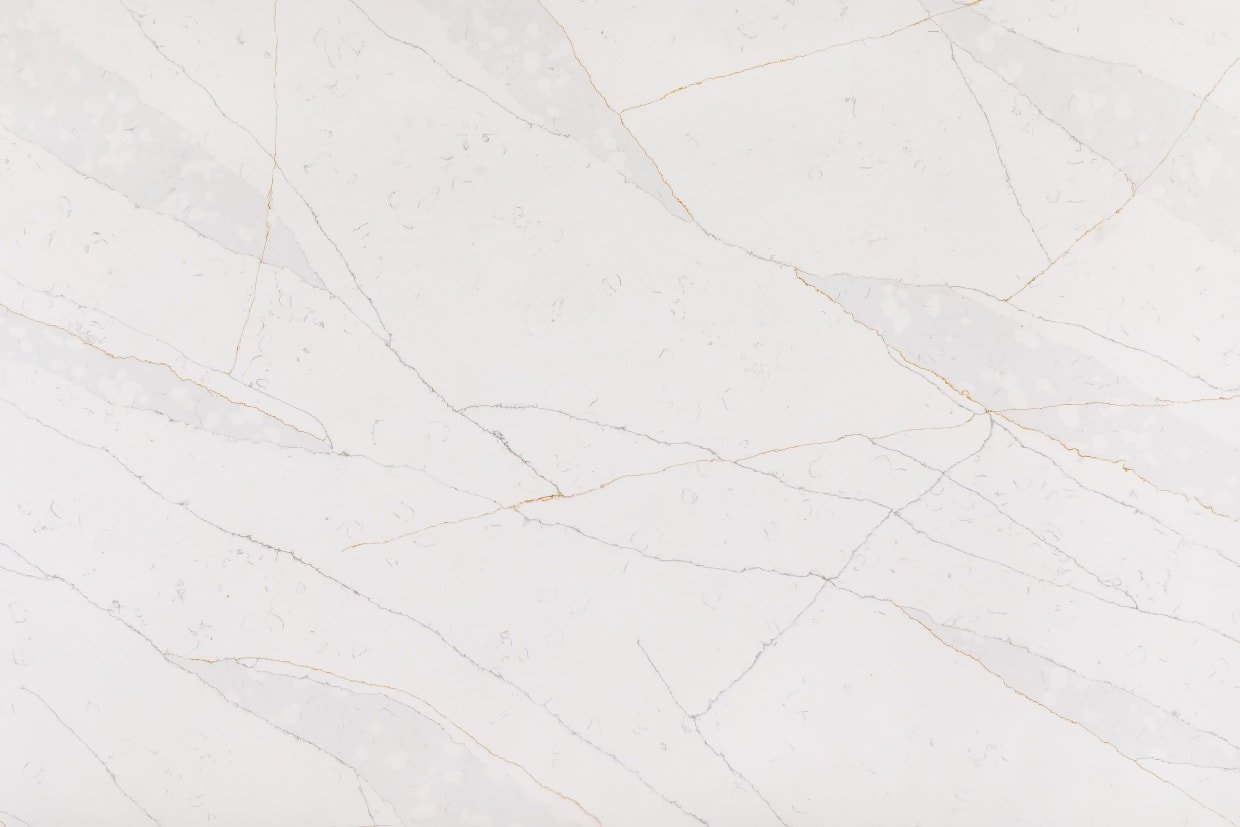
A polished factory finish on Calacatta Fresh (G047), the kind of glossy surface discussed in everyday care advice.
Need aftercare advice for a specific slab?
If you bought Aspire Stone slabs or cut-to-size pieces and need the care information that applies to that colour and finish, contact Aspire Stone with the product name and, if you have it, the batch or order reference. The company has not published a full public care manual on the pages reviewed for this article, so a written product-specific note should be requested rather than assumed. Installers should also leave the manufacturer’s care instructions with the customer when a top is handed over.


 WhatsApp
 EMAIL