




Polished vs Honed Quartz Finishes: How to Choose
A polished quartz finish is high-gloss and reflective; a honed finish is matte or satin and diffuses light. The same color can look brighter when polished, and quieter when honed. Several manufacturers say honed and other low-sheen finishes show fingerprints, water marks, and metal traces more readily and need more frequent cleaning. Neither finish is maintenance-free; the right choice depends on lighting, traffic, and the look you want.
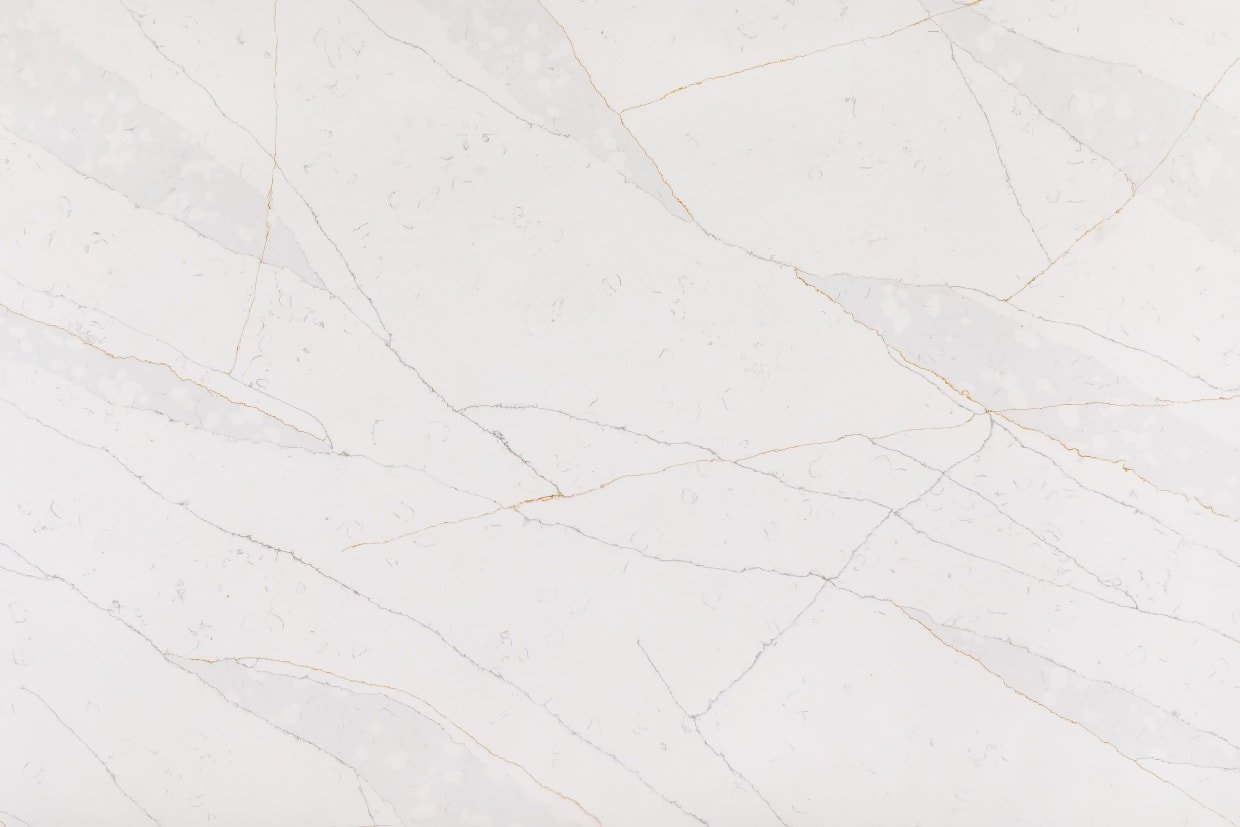
A high-gloss polished factory finish on Calacatta Fresh (G047).
What do polished, honed, and textured quartz finishes mean?
Finish is the last factory step on a cured slab, after calibration. A polished face is worked to a high gloss. A honed or matte face is taken to a lower sheen, sometimes with a lightly tactile feel. Textured finishes—named differently by each brand, such as leather, concrete, natural, or rough—add more surface relief. ISFA 3-01 notes that quartz surfacing is manufactured as slabs of various thicknesses and is finished as part of that industrial process. The factory finish is part of the specified product, not an afterthought.
There is no single industry name for every low-sheen look. “Honed,” “matt,” and “matte” are often used interchangeably in trade practice. Always confirm the manufacturer’s finish name, because a “natural” or “suede” finish may not be the same as a standard hone. A companion article on quartz slab sizes, thicknesses, and finishes places finish alongside format. For how finish affects a room, see also quartz colors for modern kitchens.
Aspire Stone’s Carrara and veined quartz slabs page lists polished or honed finishes among the options on each product page, with listings at 3200×1600 mm in 20 mm or 30 mm. That is the published description for those listings, not a claim that every Aspire Stone color is stocked in both finishes. Confirm the finish on the color you are ordering.
How do gloss, color, and pattern look in a room?
Polished quartz reflects light. Colors often appear deeper or more vivid, and veining can look sharper because contrast is easier to read on a glossy face. In a bright kitchen, that reflectivity can be part of the design, or it can bounce overhead lighting in a way the client finds distracting. Caesarstone’s finish guidance describes polished quartz as high-gloss and reflective, and honed quartz as matte or satin-like, with a more contemporary, softer sheen that reflects light less easily.
Honed quartz mutes reflections. The same color can look slightly lighter, softer, or less saturated than its polished counterpart, because light is scattered rather than returned as a highlight. Pattern scale still matters: a busy vein can be easier to live with on a quieter sheen, while a pale solid may show everyday marks more clearly when it is honed. View a sample—or, better, a slab—under the project’s actual lighting, including daylight and the specified fixtures. Do not approve a honed color from a polished photograph, or the reverse.
Is honed quartz harder to maintain, and does polished show fingerprints?
It depends on the product and the room, but several major manufacturers say their low-sheen finishes need more day-to-day attention than their polished finishes. Caesarstone’s care guidance states that honed, concrete, and rough finishes “require more cleaning than our Polished finishes,” because there is more exposed surface area, so metal marks, fingerprints, and other signs of daily living will show. Most of those marks, it says, can be removed with little effort and a non-abrasive cleaner. Cosentino’s Silestone manual gives similar advice for suede, leather, and volcano textures: they are rougher, more susceptible to marks, and “high maintenance surfaces” relative to a polished top.
That is not a rule that every honed quartz in every color is harder to live with than every polished slab. A busy, mid-tone honed pattern may hide fingerprints better than a dark, polished solid, which can show dust, limescale, and streaks. Caesarstone also notes that patina and stains may be more noticeable on dark surfaces, and that liquids should not be left to dry on the top. Polished quartz can show fingerprints and smears too, especially on dark colors, but the same care pages present polished as the lower-maintenance standard finish.
Both finishes still need a soft cloth, a mild detergent, and prompt wiping of spills. Avoid abrasive pads, high-pH or strongly acidic cleaners, and products the manufacturer prohibits. Low absorption is not a reason to skip cleaning, and a honed face should not be coated with a consumer sealer unless the manufacturer says so. Cosentino’s Silestone manual tells users not to apply repellents, sealants, or polish, and not to re-polish the surface.
Can quartz be honed after installation?
Caesarstone’s published advice is that it is not recommended to alter the finish after installation. The factory-applied finish is designed for durability, and manual honing can lead to uneven texture and can void a material warranty. Other brands may take a similar position; check the warranty and the fabricator’s guidance for the slab you bought. If a honed look is required, specify it at order, and confirm that the color is produced in that finish.
Availability and lead time are project facts, not category rules. Polished is the more common factory standard. Honed or textured finishes may be a regular option on some colors and a special process on others. Caesarstone notes that producing a honed finish requires additional processing, and that honed product may carry a premium or need special ordering depending on the slab. Do not assume a price or a lead time for Aspire Stone honed slabs; ask for the current option on the chosen color.
Fabricators should keep the factory finish at the face and match the edge sheen as closely as the material allows. Edges that are polished while the face is honed can look like a different product. Include finish matching in the shop drawings and inspect the first pieces before a full run. Consistency checks should also include shade lot, because a honed and a polished slab of the “same” color are not interchangeable in one run of cabinets.
Which finish fits which room?
| Situation | Often a better starting point | Why, with caveats |
|---|---|---|
| Busy family kitchen, easy daily wipe-down | Polished, unless a specific honed color is proven in a sample | Manufacturer care pages generally present polished as lower maintenance |
| Strong overhead lighting or a room where glare is a problem | Honed or another low-sheen finish | Less mirror-like reflection; still check fingerprints on dark or plain colors |
| Dark, plain colors | Review both finishes in real light | Polished can show streaks and dust; honed can show oils and metal marks |
| Bathroom vanity with water spots | Often polished, or a honed mid-tone pattern | Honed light solids can show hard-water marks more readily |
| Hotel, restaurant, or other high-traffic commercial top | The finish the operator can clean consistently | Polished is often easier to keep even; honed can hide minor abrasion better |
| A soft, contemporary, or “unpolished stone” look | Honed, if the color is offered and approved from a honed sample | Specify the factory finish at order; do not plan to hone it later |
A kitchen quartz slab buying guide is the place to combine finish with color, thickness, and slab inspection. For commercial spaces, the cleaning crew’s routine matters as much as the architect’s rendering.
FAQ
Is honed quartz harder to maintain?
It can be. Caesarstone says honed and other textured finishes require more cleaning than polished, because fingerprints, metal marks, and everyday traces show more readily. Cosentino gives similar advice for its unpolished textures. The difference varies by color and pattern, so test the actual finish rather than assuming every honed top is high maintenance.
Does polished quartz show fingerprints?
It can, especially on dark or plain colors, but polished surfaces are generally presented as easier to wipe to an even sheen. Honed and textured faces often make oils and fingerprints easier to see because the marks contrast with a matte background. Keep both finishes dry and clean with a mild, approved product.
Can quartz be honed after installation?
It is not recommended as a standard practice. Caesarstone advises against altering the factory finish after installation, because manual honing can be uneven and may void a warranty. Specify honed at order if that is the required look, and confirm that the color is produced in that finish.
Which finish is best for kitchens?
There is no single best kitchen finish. Polished is the more common, often lower-maintenance choice. Honed is a good option when glare should be reduced or a softer look is required, provided the color is approved from a honed sample and the household accepts more frequent wiping on some colors.
Do honed and polished versions of the same color match?
Not exactly. Sheen changes how color and contrast are read. Treat them as related but different appearances, and do not mix the two finishes on adjacent tops unless that contrast is intentional and approved from actual pieces.
Need to confirm a polished or honed quartz option?
Aspire Stone can confirm which colors are offered in polished or honed finishes, and can share samples or current slab photographs for a kitchen, vanity, or commercial top. Browse the Carrara and veined series or the quartz slab series, and send the color and finish you want to check through the contact page.
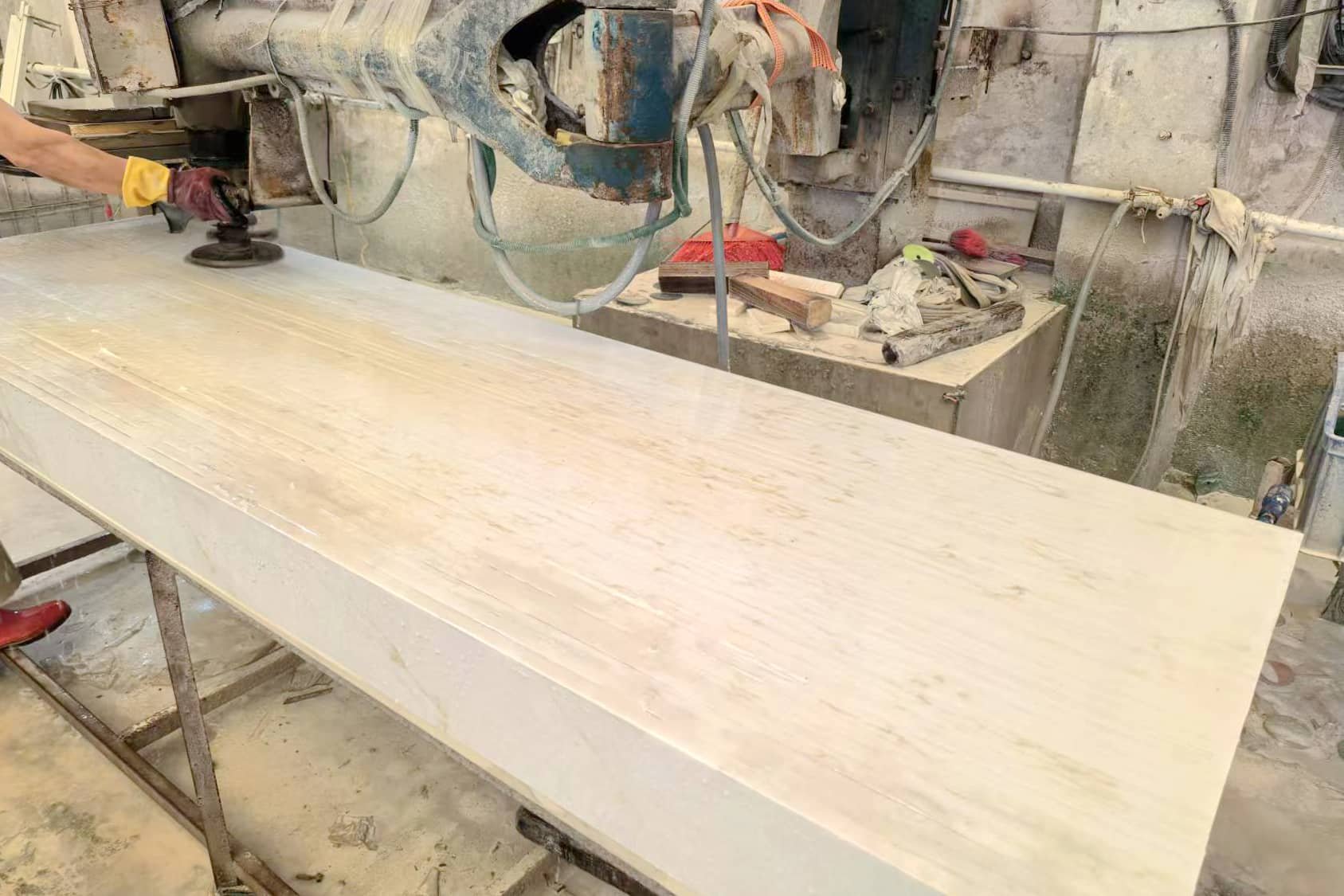
A cut-to-size quartz piece in the workshop, showing the face finish and a thick polished edge.


 WhatsApp
 EMAIL