




Engineered Stone Regulations by Country: Bans, Exposure Limits and Buyer Duties
Engineered-stone rules are not the same in every country. Some jurisdictions restrict the product itself. Others regulate only the dust created when the stone is processed. Importers and fabricators should start with the destination country’s current official text, not a marketing claim or a summary from another market. This article maps that difference. It is not legal advice and not medical advice.
Why do engineered-stone rules differ by country?
Governments use two different kinds of control, and they are easy to confuse. A product rule can prohibit the manufacture, supply, processing, installation, or import of a defined article. A workplace rule can set an exposure limit for respirable crystalline silica (RCS), require dust controls, training, or medical surveillance, and still allow the product to be sold. A country can have one, the other, both, or a mix that changes over time.
Definitions also differ. “Engineered stone,” “artificial stone,” “quartz,” “low-silica,” and “silica-free” are not interchangeable legal terms. In Australia, “engineered stone” is defined in work health and safety law by composition, how the product is made, and the form in which it is supplied. In the United States and Great Britain, the core official texts discussed below are workplace exposure standards, not product bans. A buyer who copies one country’s threshold into another country’s paperwork is mixing legal systems.
Only jurisdictions whose current official sources were fetched on 23 November 2026 (Asia/Shanghai, UTC+8) are included below. Absence from this table is not a finding that a country has no rules. It means a current official text was not verified for this article. The European Union and the United Arab Emirates are omitted for that reason. Rules can change; check the live official source before importing or processing.
Which countries restrict engineered stone, and which mainly regulate exposure?
The table is a date-stamped orientation, not a compliance certificate.
| Jurisdiction | Product prohibition identified in official text fetched on 23 November 2026? | Workplace or import rules identified | Official starting points (verify live) |
|---|---|---|---|
| Australia | Yes. The manufacture, supply, processing, and installation of engineered-stone benchtops, panels, and slabs is prohibited under jurisdictional work health and safety laws giving effect to the model WHS amendments (from 1 July 2024). Importation of engineered stone in those forms is prohibited from 1 January 2025 under regulation 5M of the Customs (Prohibited Imports) Regulations 1956, unless a stated permission, confirmation, or exemption is produced. | The model WHS Regulations define engineered stone, in summary, as an artificial product that contains at least 1% crystalline silica as a weight/weight concentration, is created by combining natural stone materials with other chemical constituents (such as water, resins, or pigments), and becomes hardened, with listed exclusions. Broader duties for work with crystalline silica substances also apply. Implementation can vary by state and territory. | Safe Work Australia engineered-stone ban page; Federal Register of Legislation, Customs (Prohibited Imports) Regulations 1956, regulation 5M (Compilation No. 147, compilation date 13 July 2026); Australian Border Force Customs Notice 2024/45; the WHS regulator in the relevant jurisdiction. |
| United States | No federal engineered-stone product ban was identified in the OSHA standards fetched for this article. | OSHA 29 CFR 1910.1053 sets a PEL of 50 µg/m3 and an action level of 25 µg/m3, each as an 8-hour TWA, with assessment, control, respirator, training, housekeeping, and medical-surveillance duties. Construction work is covered under 29 CFR 1926.1153. State-plan workplace rules may add requirements and should be checked separately. Those exposure rules are not a product ban. | OSHA 29 CFR 1910.1053 and 1926.1153; OSHA/NIOSH Hazard Alert OSHA 3768 (NIOSH 2026-101). |
| Great Britain | No product ban was identified in the HSE pages fetched for this article. In a written parliamentary answer of 18 March 2026, the UK Government stated that HSE has not proposed a restriction on the use of engineered stone. | Employers must assess and control RCS exposure under COSHH. HSE states that the WEL for RCS is 0.1 mg/m3 as an 8-hour TWA, and that health surveillance is required in stated circumstances. Task guidance, including COSHH essentials ST3A, is advisory unless a duty says otherwise. | HSE silicosis page; HSE “Working engineered stone: Control silica risk”; COSHH essentials ST3A; UK Parliament written answer UIN 118292 (18 March 2026). |
| Canada | No national product ban is stated in the CCOHS engineered-stone fact sheet fetched for this article. | CCOHS states that each jurisdiction has legislated exposure limits for silica, that some provinces and territories (for example, Ontario) also have specific control-programme requirements, and that employers have a general duty to take reasonable precautions and should reduce exposure to as low as possible. The applicable provincial or territorial statute is the controlling text. | CCOHS, “Engineered Stone Countertops” (fact sheet last revised 30 January 2025; page fetched 23 November 2026); the occupational health and safety regulator in the destination province or territory. |
A fuller account of the Australian prohibition, including exclusions and import conditions, is in Australia’s engineered stone ban: what importers and buyers need to know. The workplace-health background is in understanding silica in engineered stone.
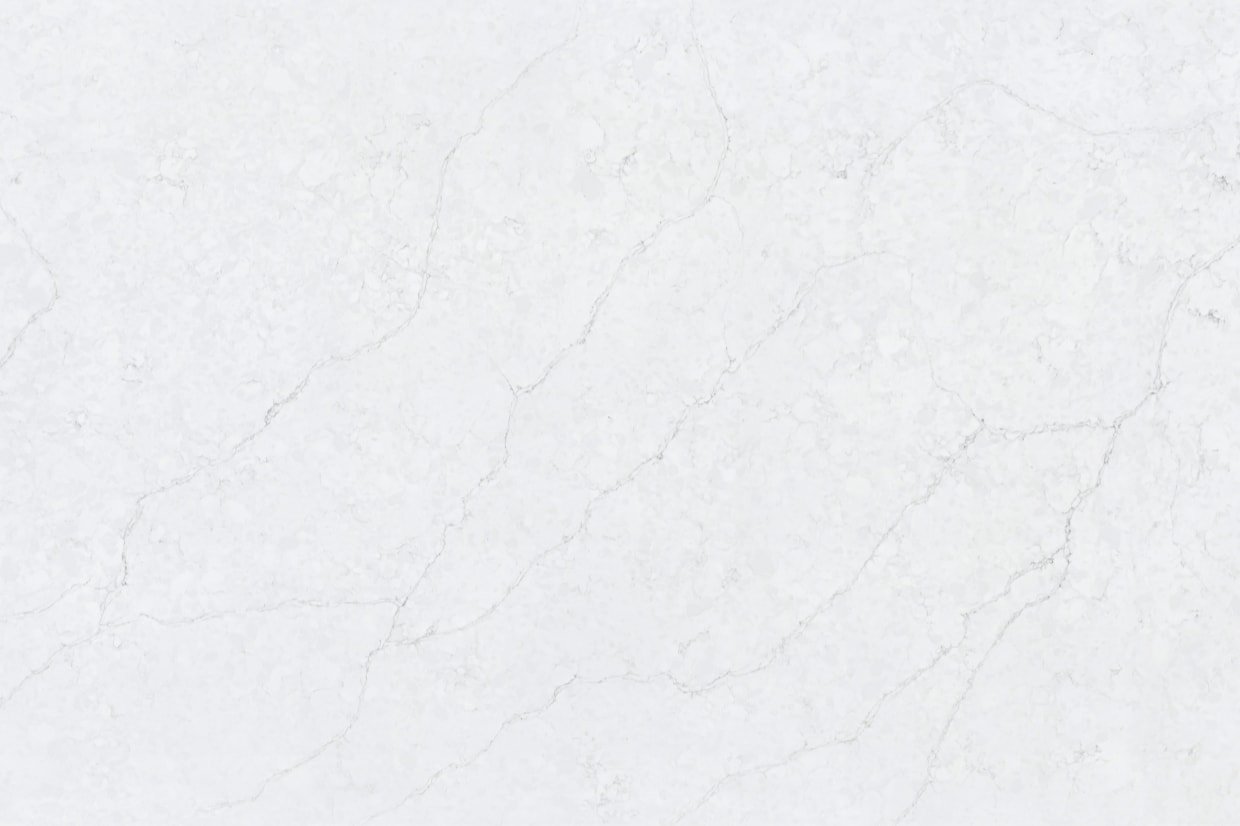
Carrara Venato, a named model from Aspire Stone’s live series pages. The caption is the model name only.
Do low-silica or silica-free products fall under bans?
Only if the product meets the legal definition in the destination country. A commercial name is not a legal classification.
In Australia, Safe Work Australia’s official ban page states that an artificial stone benchtop, panel, or slab that contains less than 1% crystalline silica is an example of a product that is not prohibited, because the definition of engineered stone requires at least 1% crystalline silica. A product that still contains at least 1% crystalline silica can meet the definition even if it is marketed as “low-silica.” Porcelain or sintered stone that does not contain resin is described by Safe Work Australia as excluded from the definition; the trade name alone is not enough if the product in fact contains resin or otherwise meets the definition. Australian Border Force guidance also warns that a declaration, by itself, is not evidence, and that goods labelled “crystalline silica free” may still contain more than the threshold.
In the United States, Great Britain, and Canada, the official sources above regulate exposure during processing. They do not, in the texts fetched for this article, create a silica-percentage product ban. A lower crystalline-silica content does not remove workplace duties. How to test and file a claim is covered in what buyers should verify before purchasing low-silica or silica-free surfaces.
Who is responsible for what?
Responsibility is allocated by local law, but buyers should not assume that a manufacturer’s file shifts the duty. In general terms:
- Manufacturers and suppliers are often expected to describe composition accurately and to supply safety information required by the destination market.
- Importers and customs brokers are often responsible for the classification of the goods and for producing any permission, confirmation, exemption, or supporting test file required at the border.
- Fabricators and installers are usually the persons who must control RCS exposure in the workshop or on site, train workers, and, where required, notify a regulator or provide health surveillance.
- A person conducting a business or undertaking (the Australian term) or an employer (in US, GB, or Canadian usage) cannot treat a brochure as a substitute for those duties.
A certificate, safety data sheet, or laboratory report is not, by itself, proof of destination-market compliance. One report does not cover all countries, products, batches, or uses.
What documents should importers and fabricators keep?
Keep a file that can be traced from the shipment to the tested sample. The exact list depends on the market, but a practical register includes:
- The commercial invoice, packing list, and a product description that states the material type, form (for example, slab, panel, or benchtop), model or colour name, thickness, and batch or lot.
- A composition declaration that names crystalline silica (and, where the method identifies them, quartz, cristobalite, and tridymite), as a weight/weight percentage or as a result below a stated detection limit.
- A laboratory report with the accreditation of the lab, the method, the sample identity, the date, and the result, linked by evidence to the batch being shipped.
- A safety data sheet where the destination market requires one, treated as hazard communication, not as a substitute for the composition test.
- Any import permission, confirmation of end use, exemption, or regulator correspondence, if the market uses those instruments.
- Workshop exposure assessments, training records, and the written control plan required by local occupational-health law.
Aspire Stone can discuss composition statements, laboratory reports, and related communication with buyers. Those documents still have to be read against the destination country’s current official text. This article has not verified any Aspire Stone test report or certificate.
How should a buyer check for updates before importing or processing?
- Identify the destination country and, where relevant, the state, territory, or province, and the intended activity (import, supply, fabrication, installation, or repair of already-installed material).
- Open the current official legislation or regulator page, not a news article or a law-firm summary, and record the date of the check.
- Match the product to the legal definition: form, crystalline-silica content, binders such as resin, and any listed exclusions.
- Confirm whether an import control, permit, or exemption applies, and whether a workplace exposure programme is required regardless of the product’s legal status.
- Repeat the check when the product, batch, destination, or intended use changes, and before relying on an older report.
Selecting surfaces for a project that crosses borders is covered in how to select compliant stone surfaces for international projects. For questions about a specific shipment, use Aspire Stone’s contact page, then have the file reviewed by advisers who practise in the destination market.
A longer view of how those material and regulatory pressures may develop is in materials, technology, and market forces shaping engineered stone.
FAQ
Are engineered stone products banned?
Not everywhere, and not under a single global definition. As of the official sources fetched on 23 November 2026, Australia prohibits the manufacture, supply, processing, and installation of engineered-stone benchtops, panels, and slabs, and prohibits importing those goods under regulation 5M unless a stated permission, confirmation, or exemption applies. The United States, Great Britain, and Canada, in the official texts fetched for this article, regulate workplace exposure rather than banning the product at federal or national level.
Which countries restrict engineered stone?
Of the jurisdictions verified for this article, Australia is the one with a product prohibition of the kind described above. Other countries may have workplace limits, state or provincial additions, or later product rules that this article has not verified. Always read the current official text for the destination market.
Do low-silica products fall under bans?
They may or may not, depending on the legal definition and the measured crystalline-silica content. In Australia, a product that still contains at least 1% crystalline silica can be engineered stone even if it is sold as low-silica. A result below that threshold, obtained by a suitable method on a sample that represents the shipment, is part of the assessment; a marketing name is not.
What should importers verify?
Verify the destination rule, the product definition, the form of the goods, the current composition report and its link to the batch, and any permit or exemption that the border agency requires. Do not treat a safety data sheet, a catalogue page, or a single percentage without a method and date as sufficient evidence.
Does a laboratory report prove compliance in every market?
No. A report speaks to the sample, method, and date stated on it. It does not, by itself, satisfy every country’s product definition, import procedure, or workplace duty, and it does not replace legal advice in the destination market.
Where should a buyer start on Australia specifically?
Start with Safe Work Australia’s engineered-stone ban page, the current text of regulation 5M, and the WHS regulator in the relevant jurisdiction. The companion article on Australia’s engineered stone ban walks through those sources in more detail.


 WhatsApp
 EMAIL