




How to Choose a Quartz Slab for a Kitchen: A Buyer Checklist
Choose a kitchen quartz slab by matching use, lighting, and layout to a color and pattern viewed in real light, then confirm thickness, finish, edges, and care limits. Inspect the actual slabs, keep them in one shade lot, and plan seams and waste before cutting begins. Popular colors are a starting point, not a specification. The right slab is the one that still works after cooking, cleaning, and later repairs.
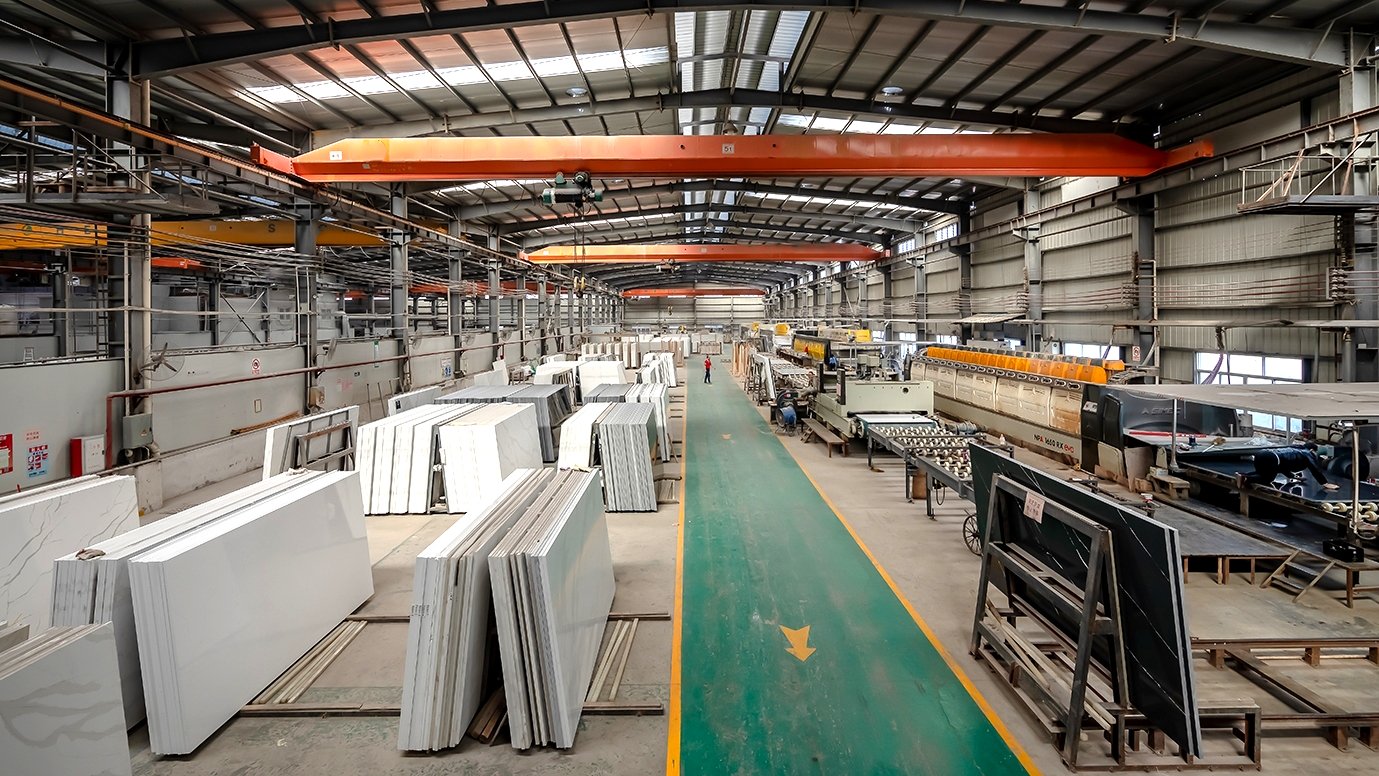
Full slabs stored in the factory hall, useful for judging pattern scale before a kitchen layout.
What should you decide before looking at colors?
Start with how the kitchen will be used. A household that cooks daily, parks bags on the island, and wipes the top in a hurry has different priorities from a show kitchen that is used lightly. Think about staining foods, hot pans, sitting water near the sink, and whether the island will also be a desk or a bar. Those habits should shape color, pattern scale, and finish before anyone falls in love with a photograph.
Layout and slab size control seams. A long galley, a large island, or a waterfall end may need a joint or a jumbo format. Measure cabinet runs, overhangs, cooktop and sink openings, and any returned ends, then ask how those pieces will nest on the slab. A companion article on quartz slab sizes, thicknesses, and finishes is the place to compare formats. If pieces will be supplied cut-to-size rather than as full slabs, the same measurements still come first.
Lighting changes color. A cool white that looks clean in a showroom can appear blue or grey under a kitchen’s LED lamps, and a warm veined slab can go yellow in late-day sun. View samples vertically and horizontally, next to the cabinet door, flooring, and wall paint, in both daylight and the specified artificial light. A separate guide to matching quartz with modern kitchen colors helps with palette, but it does not replace a sample in the room.
How should you judge color, veining, and pattern scale?
There is no single best kitchen color. Pale, lightly veined designs can brighten a room and show crumbs or tea marks more readily. Dark solids can look tailored and may show dust, limescale, and fingerprints. Busy veins hide everyday traces and need more care at seams. Mid-tone, moderately patterned slabs often sit between those extremes. Choose from the way the kitchen will be used and lit, not from a short list of trends.
Pattern scale should be judged on a full slab, or at least on a large current photograph of the actual batch, not only on a 10 cm sample. A small chip of a Calacatta-look design can look calm, while the slab has wide movement that will dominate a small galley. The reverse is also true: a quiet Carrara-like vein can almost disappear on a large island if you expected a bold book. Aspire Stone publishes Calacatta quartz slabs as a white background with grey or gold veining, and Carrara and veined quartz slabs for kitchens, vanities, and bar tops. Those are manufactured looks, and they should be approved from the slabs that will be cut. For a book-matched or vividly veined island, the live article on bookmatching in quartz slabs is useful when planning a pair of faces.
Look at series, not only at a single hero color. Aspire Stone’s quartz slab series also includes solid color, sparkling, printed, exotic, low-silica and silica-free, and super-jumbo options. A solid such as those listed on the solid color quartz slabs page—Snow White, Jet Black, and Coast Beige are among the designs named there—will read very differently from a heavily veined slab at the same thickness and finish.
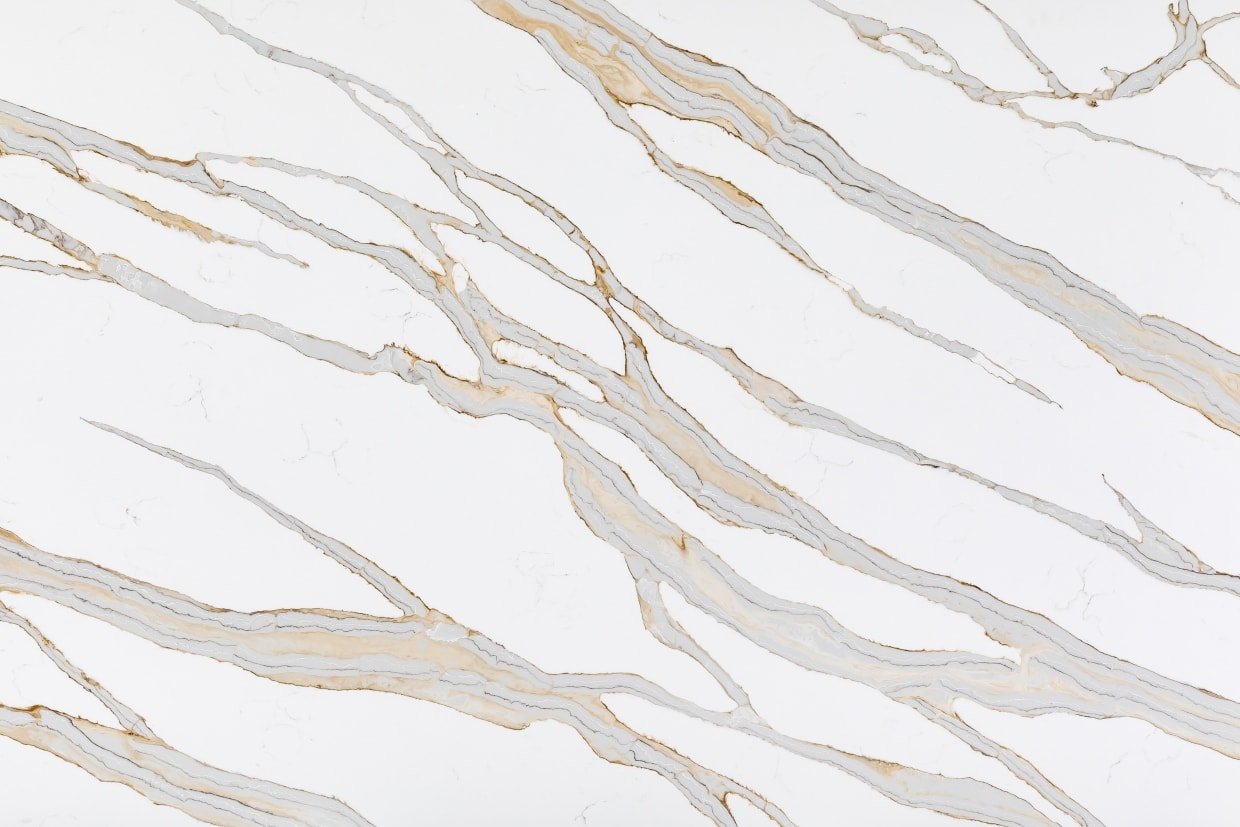
Vein scale on Calacatta Venatina (G017), a marble-look design used when planning a kitchen layout.
What thickness, finish, edge, and backsplash should you specify?
ISFA 3-01 notes that quartz surfacing is generally available in 1.2 cm, 1.5 cm, 2 cm, and 3 cm thicknesses, although other gauges are possible. For kitchen countertops, 20 mm and 30 mm are the most common commercial thicknesses. Aspire Stone’s Carrara and veined, and solid color, listings fetched on 23 November 2026 are published at 3200×1600 mm in 20 mm or 30 mm. Treat those figures as the published specifications for those listings, not as an industry-wide standard or as a guarantee for every color. Thicker material can support a more substantial edge or a longer overhang; thinner material may need a built-up edge or closer support. Follow the fabricator’s span and overhang rules.
Finish changes both look and cleaning. A polished face is high-gloss; a honed or matte face is quieter and, on many manufacturers’ care pages, needs more frequent wiping of fingerprints and metal marks. The Carrara and veined listings name polished or honed among the options on each product page. Confirm the finish on the color you are ordering, and do not assume a honed slab can be created later from a polished one. A full polished vs honed quartz comparison is worth reading before the finish is locked.
Edge profile should be chosen with thickness, budget, and cleaning in mind. A simple eased or slight bevel is easier to keep clean than a detailed ogee. Mitered or laminated edges can create a thicker look from 20 mm material, but they add joints and fabrication time. Coordinate the backsplash at the same time: a 10 cm upstand, a full-height slab splash, or a different wall finish will change how much slab you need and whether veining must run through the splash. Ask the fabricator to show the edge and splash on the layout drawing, not only on a catalog sketch.
What technical limits should a kitchen specification respect?
Engineered quartz is typically a low-absorption indoor surface, but it is not heat-proof, stain-proof, or maintenance-free. Caesarstone’s UK care guidance says the surface should be protected from temperatures above 150°C or 300°F and from sudden temperature changes, and that hot cookware should sit on a trivet. Cosentino’s Silestone manual gives the same practical rule and says not to place the surface outdoors or anywhere exposed to direct UV rays. If the kitchen opens to strong sun or to an outdoor counter, confirm whether the product is documented for that exposure. A quartz vs granite comparison is useful if heat or outdoor use is pushing the project toward natural stone.
Stains and chemicals still matter. Wipe pigmented foods, oils, and solvents promptly, and use the cleaners the manufacturer allows. Dark or plain colors can show limescale and streaks; honed finishes can show oils more readily. Impact risk is highest at corners, sink cut-outs, and thin overhangs. None of those limits disappear because a slab is “quartz.”
If the project will be fabricated in a market with engineered-stone or crystalline-silica rules, ask for the product’s composition disclosure and any low-silica or silica-free documentation that belongs to that color. Aspire Stone publishes low-silica and silica-free quartz surfaces. A lower crystalline-silica content is not automatically silica-free, and it is not a substitute for safe fabrication practice. A dedicated explanation of what low-silica quartz is should be read before that language is written into a specification.
How do you inspect slabs, match batches, and plan waste?
Inspect the slabs that will be cut, not a leftover sample from an earlier lot. Check for shade, pattern movement, gloss or hone evenness, pits, chips, and any visible resin or particulate clusters that you would reject in the kitchen. View the slab in good light, standing it as it will be seen on the cabinets. For veined designs, mark the preferred area for the island and the less conspicuous areas for periphery or splash pieces.
Keep one job in one shade lot, and reserve replacement or later-phase material from the same lot when the project may be extended. Batch-to-batch variation is normal in manufactured stone, even when color control is tight. If more than one slab is needed, dry-lay or digitally layout the faces so vein direction and contrast agree at the seams.
Plan waste honestly. Islands, angled corners, large cut-outs, book-matched faces, and waterfall ends all raise the yield factor. A simple rectangular run can be much more efficient than a kitchen with many short returns. Ask the fabricator for a cutting plan and a waste allowance before the slab quantity is fixed. Aspire Stone also supplies cut-to-size quartz slabs from drawings, which can move some of that planning to the factory if the project is buying finished pieces rather than full slabs.
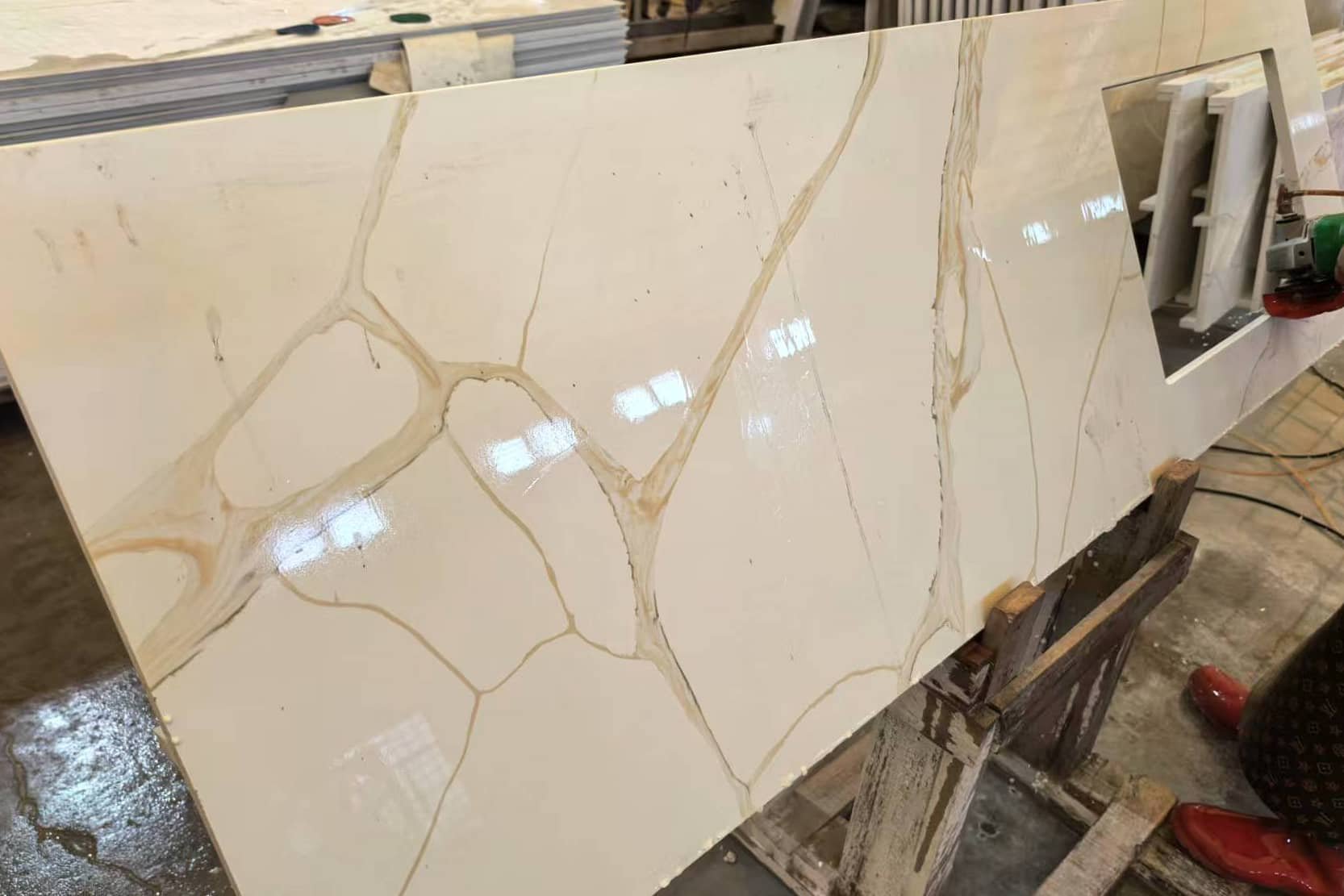
A kitchen countertop piece photographed after cut-to-size work in the workshop.
A kitchen quartz buyer checklist
| Stage | What to confirm | Notes |
|---|---|---|
| Room and use | Cooking habits, lighting, cabinet and floor colors, indoor or outdoor exposure | View samples in the actual kitchen light |
| Design | Color, pattern scale, vein direction, splash, and whether a book-matched look is required | Approve a full slab or a current batch photograph, not only a chip sample |
| Specification | Thickness, finish, edge, slab size, and any low-silica documentation needed | Use the product’s published data, not a category average |
| Quality | Shade lot, inspection of the actual slabs, layout and seam positions | Hold extra from the same lot if later work is likely |
| Quantity and supply | Cutting plan, waste allowance, lead time, packing, and whether you are buying slabs or cut-to-size pieces | Price the installed top, not only the slab |
- Have we viewed a sample or slab in the kitchen’s daylight and artificial light, next to cabinets and flooring?
- Have we approved the actual slabs or a current batch photo for shade and pattern scale?
- Is the thickness and finish confirmed for this color, including honed availability if required?
- Are seams, edge profile, splash, cut-outs, and overhangs shown on a layout drawing?
- Have we read the product’s care guide for heat, UV, chemicals, and cleaning?
- Is the shade lot identified, and is any reserve material from the same lot?
- If crystalline-silica content matters for fabrication, have we requested the disclosure, method, and date for this color?
- Is the waste allowance and the slab or cut-to-size quantity agreed in writing?
- Who is fabricating and installing, and what is the inspection process before packing or before fitting?
- Do we have a contact path for a replacement piece if a slab is damaged in fabrication or transit?
FAQ
What color quartz is best for a kitchen?
No single color is best. Choose from use and lighting: pale or busy patterns hide or show marks differently, and a sample can look unlike a full slab. Approve the actual batch in the room’s light, next to cabinets and flooring, rather than following a trend list.
What thickness should I choose?
Many kitchens use 20 mm or 30 mm quartz. ISFA 3-01 lists 2 cm and 3 cm among the usual gauges. Aspire Stone’s Carrara and veined, and solid color, listings are published in 20 mm or 30 mm at 3200×1600 mm. Confirm the thickness offered for your color, and follow the fabricator’s rules for edges and overhangs.
How do I match quartz with cabinets?
View a current sample or slab beside the actual cabinet door, in the kitchen’s light. Warm or cool undertones, and the scale of any vein, matter more than a generic “white with white” rule. Repeat the check against flooring and wall color before the slab is cut.
How do I inspect a quartz slab before buying?
Inspect the slabs that will be fabricated. Check shade, pattern, finish evenness, and visible defects in good light, and confirm they come from one shade lot. For veined designs, agree the layout so the best area lands where it will be seen.
Do I need a full slab or a cut-to-size order?
Buy full slabs if a local fabricator will nest and finish the work. A cut-to-size order is useful when you can supply accurate drawings and want pieces finished and packed for installation. In both cases, agree the layout, edges, and inspection steps first.
Ready to shortlist kitchen quartz slabs?
Aspire Stone manufactures engineered quartz in Foshan, China, and can help a cabinet dealer, designer, or project buyer shortlist colors, confirm finishes and thicknesses, or quote cut-to-size kitchen pieces. Browse the published series, then send drawings, lighting notes, and preferred looks through the contact page.
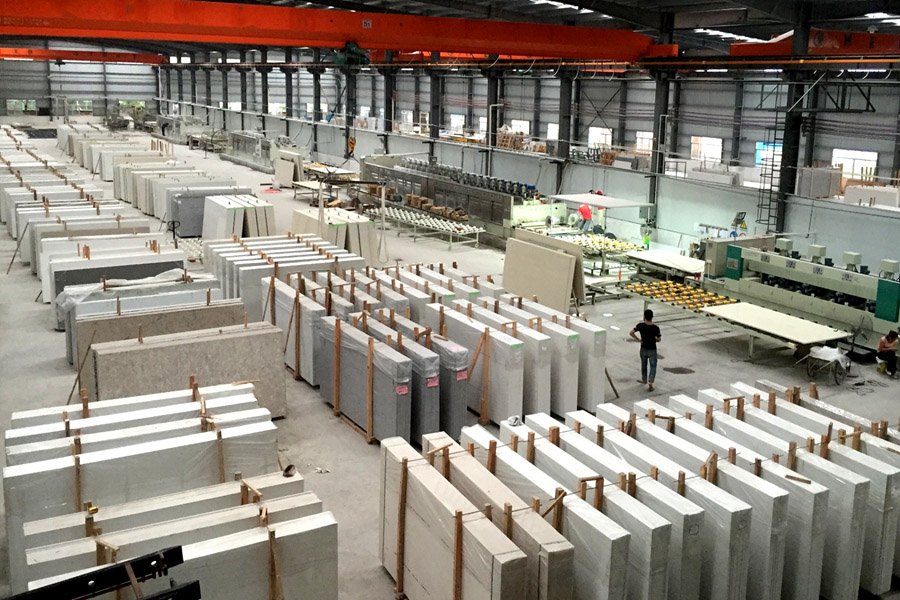
Finished slabs stored at the Aspire Stone factory in Foshan.


 WhatsApp
 EMAIL